
Surviving Vancouver’s Rainy Season
It rains in Vancouver.
A lot. An annual average of 1153.1 mm (47”). That’s twice as much as London. It’s not surprising. It’s set in The Great Bear Rainforest, a temperate rain forest on the Pacific coast of British Columbia, Canada.
When I moved to Vancouver it rained for three solid weeks. Unrelenting, straight down, stair-rail type of rain. Locals said, ‘just wait’. I did. After the soggiest three weeks of my life, the rain subsided, and I found paradise.
March and November are the worst offenders, but the month of June can bring in the pesky precipitation too. Vancouverites have stoically learned to embrace the wet stuff, all 160 plus days a year of it. Visitors, on the other hand, mostly come unprepared, mentally, or wardrobe-wise.
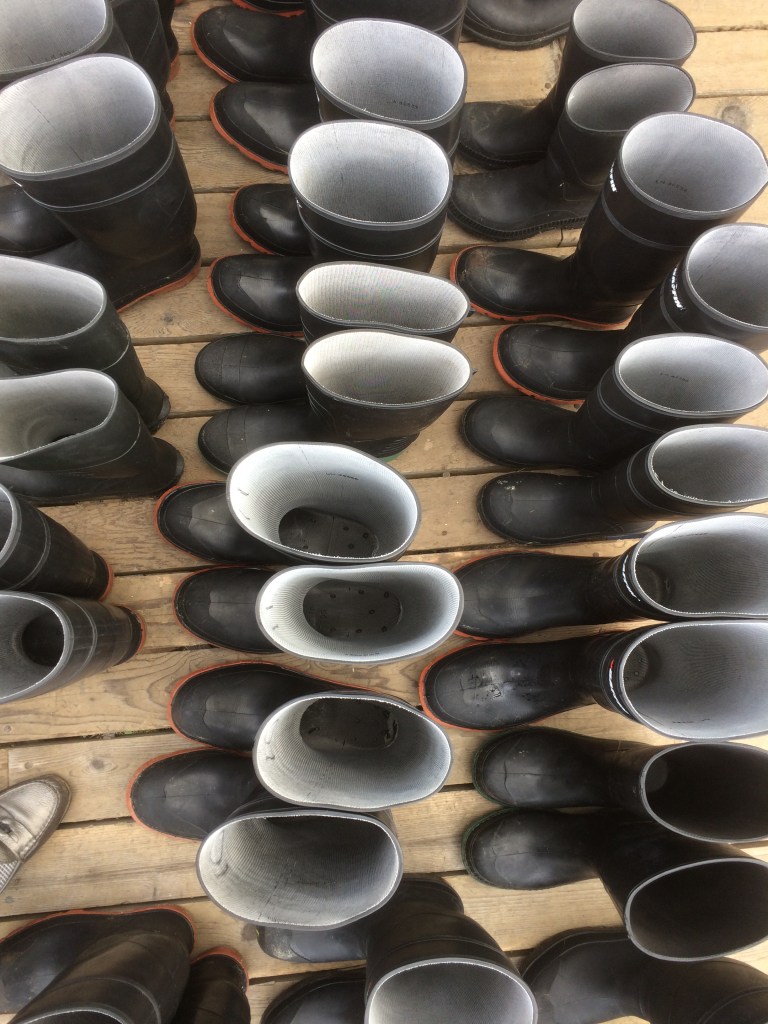
Fortunately, the city and its attractions have adapted perfectly to its oft-soaking climate. There are plenty of things to do in the rain with the right gear, think – boots, slicker and hood or hat. Don’t let a little bit of water stop you.
Stanley Park http://vancouver.ca/parks-recreation-culture/stanley-park.aspx
In 1886, the city fathers of Vancouver had the foresight to protect 400 hectares of old growth trees back when the city was a few tents in a forest. How could they have known we were going to fell, chop and slay our way through the precious forests like a demented logger.
Stanley Park is the green oasis in Canada’s third largest city. The diverse habitats of boggy wetlands, coniferous forests and rocky shores are interspersed with water parks, cafés, swimming pools, an internationally renowned aquarium, and an open-air theatre.
Vancouver Aquarium http://vanaqua.org
In the heart of Stanley Park, the Aquarium is home to over 50,000 animals. Grinning, lard-coloured beluga whales and eerily translucent jelly fish welcome you as you drip your way through exhibits such as the Amazonian gallery, where red ibises dart from tree to tree. And somewhere in there is a sloth.
The Aquarium partners with world scientists in collecting data about wild populations. It hosts an extensive volunteer program, particularly for the Great Canadian Shoreline Clean-up. https://www.shorelinecleanup.ca
Museum of Vancouver (MOV) http://museumofvancouver.ca
The museum building is a unique silvery, space-ship shaped building with a 20-foot steel sculpture of a crab standing sentinel at the entrance. Worth visiting just for that.
With airy halls and interactive exhibits, the focus is on sharing the Vancouver story. Hence, the displays range from First Nations artefacts to the western innovations of today.
The Fifties Gallery is a scary flashback of everyday household furniture and accessories that I remember from my gran’s house.
Granville Island Public Market http://granvilleisland.com
Sitting under the Granville Street Bridge, this small peninsular is home to Granville Island Public Market, marine suppliers, art galleries, restaurants, cafés, shops and theatres.
Start with a breakfast of muffins and coffee at the Blue Parrot, spend the day browsing through the many artisan’s tables, watching buskers, or take a boat trip around False Creek. Choose from the variety of ethnic eateries – Japanese, Chinese, Thai, Italian, and end the day at the Improv theatre. (Tip: Unless you want to end up on the stage, don’t sit too close to the front.)
BC Sports Hall of Fame http://bcsportshalloffame.com
British Columbia is a sports-mad province and the city’s largest stadium, BC Place, looks like a Star Trek inspired space station. And if you don’t get the complicated one-way streets the right way around, you could be circumnavigating this building for hours.
Even so, it’s the perfect place for the Sports Hall of Fame which features the Our Teams, Our Turf gallery, dedicated to Vancouver’s three professional teams, The BC Lions, Vancouver Whitecaps and Vancouver Canucks.
Museum of Anthropology (MOA) http://moa.ubc.ca
On the Vancouver Campus of the University of British Columbia (UBC), surrounded by eagle topped fir trees, the museum is on the cliffs above Point Grey, the ancestral land of the Musqueam people.
Acclaimed Canadian architect Arthur Erickson designed the award-winning glass and wood edifice to house a world-renowned collection of Northwest Coast First People’s art. The MOA is home to works by the Salish, Nisga’a, Gitxsan bands and the world’s largest collection by Haida artist, Bill Reid.
Canada Place http://canadaplace.ca
The half-mile long pier is built into the Burrard Inlet and houses the World Trade Centre, Vancouver Convention Centre, Imax Theatre, The Pan Pacific Hotel, the Port Authority, Indigo (car & bike parking) and the Cruise Ship Terminal.
Visit Fly Over Canada (Imax Theatre), a thrilling 8-minute experience. It is the most memorable trip across Canada you have never taken. This stomach lurching ride simulates flying across 6,000 kilometres with sudden changes in feet-above-sea-level. Make sure your last meal was at least two hours ago.
Vancouver Lookout http://vancouverlookout.com
On the corner of Smythe and Cordova Streets look up. Further. Once the feeling of falling backwards subsides, you’ll notice what looks like a spacecraft on top of a high-rise office tower. Up there is the Vancouver Lookout
The first time I took the externally hung glass elevator up the vertiginous 163.80 meters of this building, I had to kneel on the floor and close my eyes. The 360-degree view of Vancouver was worth the embarrassment. Until I had to go down the same way.
Vancouver Maritime Museum http://vanmaritime.com
English explorer, Captain Vancouver put the north-west coast of the US and Canada on the map, and his name was taken for region’s new city. Vancouver’s maritime history is told in stories and boats at this museum, just minutes from downtown. The central exhibit is the St. Roche, the first vessel to navigate the Northwest passage back in 1928.
Gigantic container ships waiting for access to Vancouver’s busy harbour look down on the museum’s small dock, where historic crafts are moored, many of which can be explored by willing landlubbers.
Vancouver Police Museum http://vancouverpolicemuseum.ca
The building used to be the coroner’s office, complete with morgue and autopsy room. (Real bodies comfortingly absent.)
Read first hand police accounts of the city’s criminal history or take a walking tour through Chinatown and the seamy Downtown Eastside (DTE), where stories of drugs, prohibition, sex and scandal abound.
The disgusting smell pervading the area is not coming from the ancient mortuary. It is Durian, a fruity Chinese favourite, on sale at a nearby market. Delicious, if you can get past its smell of rotting vegetables and old sports socks.
So, go ahead. Get out and about in the beautiful rain that keeps British Columbia green. Dress appropriately- enjoy!
 Travel. Write. Drink Coffee. Repeat
Leave a comment